HISTORY OF INCENSE
Many and I mean many years ago, someone somewhere (presumably a caveman) needed to keep the flame going in his fire pit. So, in quickness he grabbed anything he could. Amongst the sticks, there were various leaves and woodland debris. Hastily, he threw all of his findings into the fire. The aroma that swirled all around him was quickly intoxicating. The earliest form of incense was born. Anew sensation was started.
Since the beginning of time incense has played a significant role in the human existence. Ever since the beneficial invention of fire, mankind has found that many materials release an odor when burnt, some very pleasing, and others not so much. These aromatic scents often accentuate the senses. Some experts believe that the burning of items such as cedar, berries, roots, and resins gave us our first true incense. Incense relics that are thousands of years old have actually been found all over the world. So, it is pretty safe to bet that incense has been a part of many different cultures for a very long time. It is because of this information that the exact origin of incense cannot be traced.
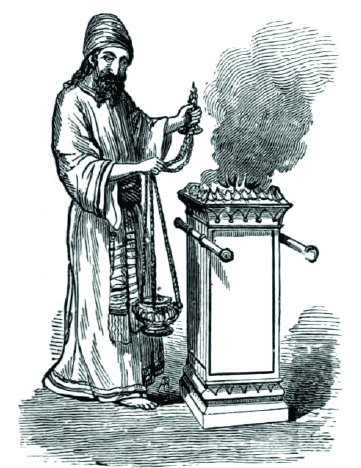
The basics of incense are really quite simple. It is a combination of aromatic elements and a heat source. Incense has always had ties to the religious and medical aspects of various cultures, and still does today. The name Incense is actually derived for the Latin verb incendere, meaning to burn
Incense is believed to be an essential element in any offerings made to the gods. Therefore, the trading market for these herbs and spices was very popular. The market demanded only the best scents and the need for prompted the market to consider these items an asset. For many of the early years before Christ, Frankincense was actually worth more than silver and gold's value. The use of Frankincense can be traced all the way back to the Ancient Egyptians, Persians, and Assyrians. This popular fragrance and its uses were learned by the Romans. This knowledge was gained through the contact that they had with the Eastern nations. The Frankincense trade thrived for some fifteen hundred years. The peak of this time was during the Roman Empire.
The decline of the Frankincense trade occurred shortly after this time. This was because of the heavy taxes of the trade routes, and the fall of the Roman Empire. Simply the demand was no longer great enough.
View More Details